
Joan Anderson Travel Service
3139632448
3139632448

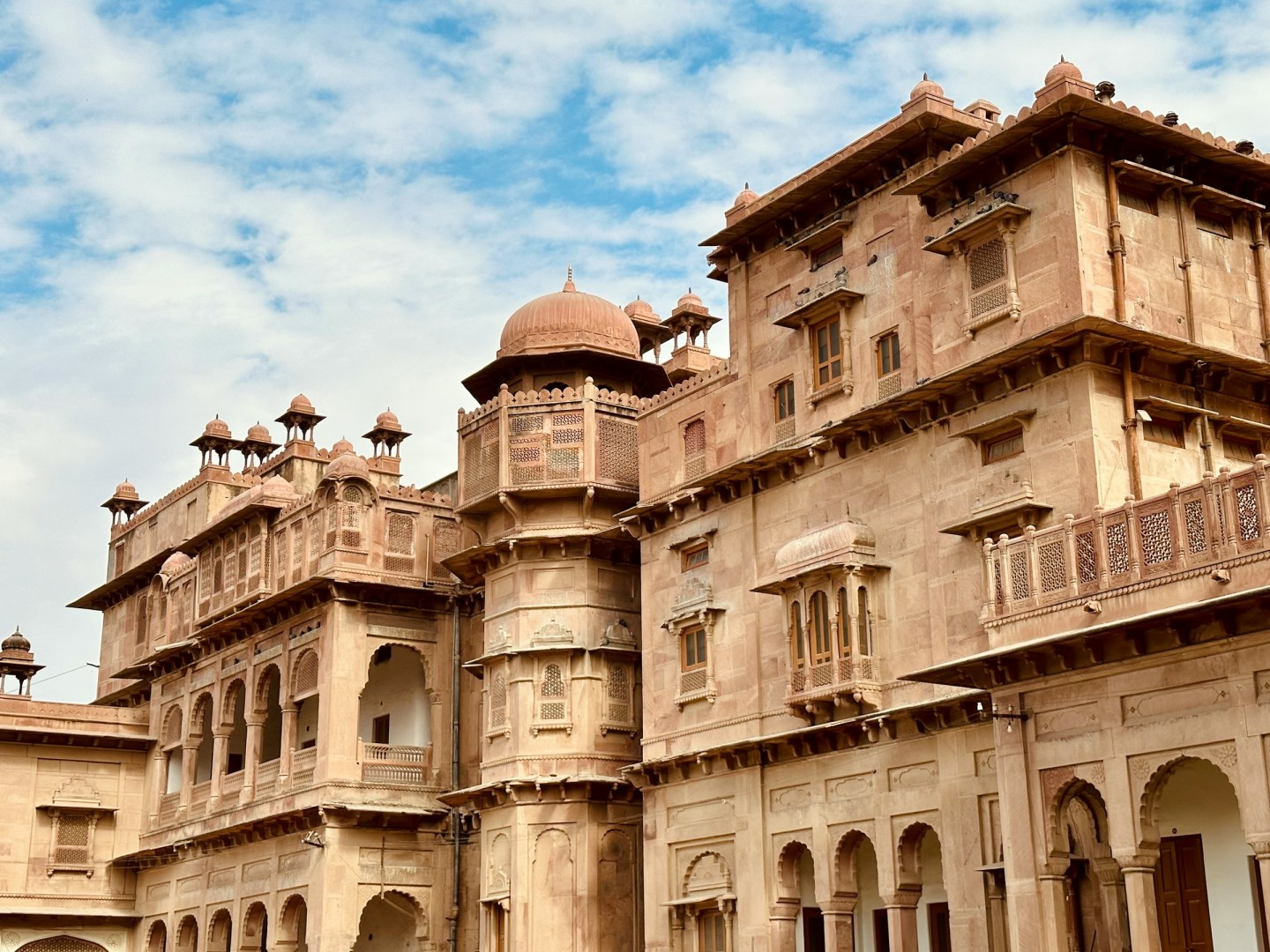
Bikaner is a historic city in Rajasthan, set on the edge of the Thar Desert in northwestern India. Its landscape is characterized by sandy plains, sparse vegetation, and hardy desert crops, while the city itself is known for its fortified walls, ornate havelis, temples, and busy bazaars. Bikaner developed as an important trading center on desert routes, and its architecture reflects the wealth created through commerce. Today, the city remains closely associated with desert culture, camel breeding, traditional crafts, and distinctive Rajasthani food.
Bikaner’s cultural identity is strongly linked with the Rathore rulers and the worship of Karni Mata, a revered Hindu saint associated with the nearby town of Deshnoke. Junagarh Fort is the city’s principal heritage landmark, containing palaces, courtyards, temples, balconies, and richly decorated interiors built by successive rulers. The fort’s museum preserves weapons, manuscripts, royal costumes, and other objects connected with the former Bikaner state. The old city also contains elaborate merchant havelis, many featuring carved sandstone façades, painted interiors, and decorative balconies that illustrate the region’s traditional architectural style.
Junagarh Fort is one of Bikaner’s most important attractions, with its massive walls enclosing a complex of palaces and courtyards. Lalgarh Palace, built in Indo-Saracenic style, provides another example of the city’s royal architecture. The nearby National Research Centre on Camel is devoted to camel breeding, research, and education and reflects the animal’s longstanding importance in desert life. Deshnoke’s Karni Mata Temple is another notable destination, famous for the large population of rats that are considered sacred and protected within the temple. The surrounding desert landscape also supports camel safaris and excursions into rural settlements.
Food is one of Bikaner’s best-known cultural features, with the city particularly associated with bhujia, a crisp snack made from gram flour and spices. Other regional foods include dal baati churma, kachori, gatte ki sabzi, and sweets made with milk, sugar, and gram flour. Bikaner’s dry climate has also influenced traditional methods of preserving and preparing food. Camel breeding remains another distinctive part of the city’s identity, with the National Research Centre on Camel maintaining herds and researching camel products. The combination of desert landscapes, royal architecture, religious traditions, camel culture, and recognizable Rajasthani cuisine gives Bikaner a distinctive place in Rajasthan.